Land
The ironbark and bloodwood woodland
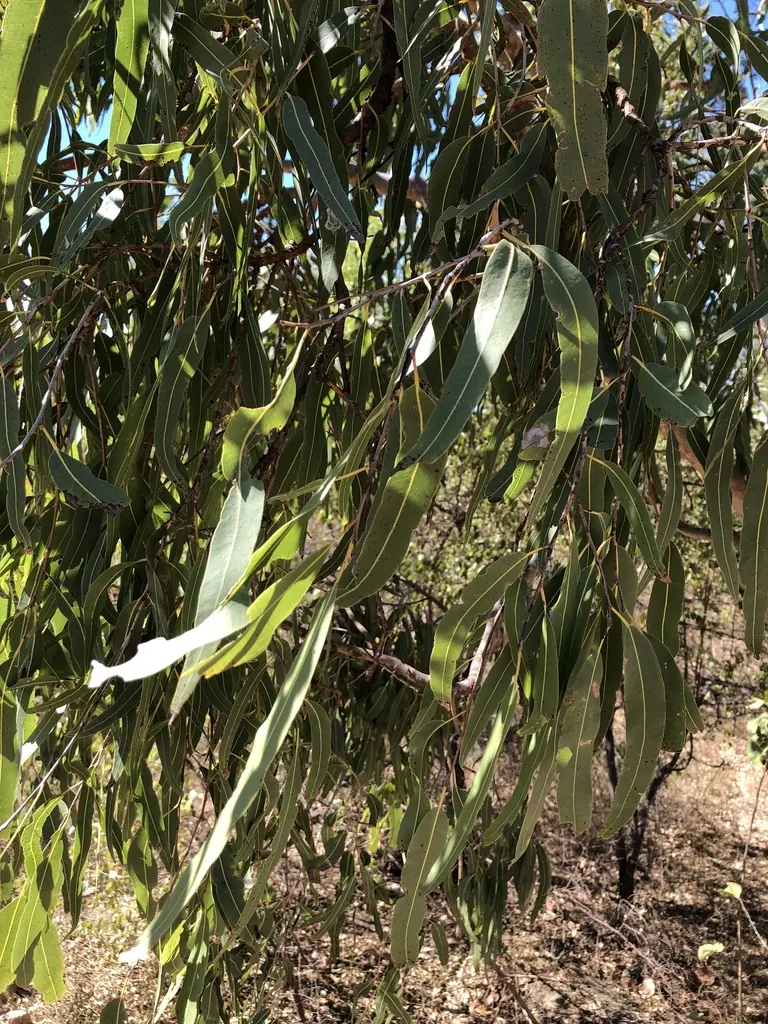
Most of Karma Waters is not river at all. It is the country between the pools: rolling hills of ironbark, box and bloodwood woodland with a sparse understorey and a grassy floor, the regional ecosystem that Queensland's mapping calls Molloy red box, Cullen's ironbark and Clarkson's bloodwood woodland[1]. The Atlas of Living Australia's most-recorded plants within 30 km of the homestead are exactly these trees, with the wattles, silver oak and bushman's clothes-peg grevillea beneath them and kangaroo grass and black speargrass under those[2]. It is the country of the wallabies and wallaroos, the goannas, the echidna and the bats, of the red-tailed black cockatoos that crack bloodwood seed and the lorikeets that strip the blossom, of the great bowerbird's avenue of white stones, the finches on the grass seed and the kites over the fires[3][4][5][6]. For Kuku Yalanji people the open eucalypt woodland was one of three inland countries, worked from the creek camps for wallaby, yams, honey and bark[7]. This page is the hub for the dry-country pages: what the trees are and how to tell them apart, what lives in them and who eats whom through the day and the year, and how the woodland is read, used and burnt.
Hann River Cape York
Possum People's country on the upper river and Thaypan (Kuku Thaypan) country downstream: stringybark and bloodwood woodland and a spring-fed sandy river that runs north-east from the Great Dividing Range, past the Peninsula Developmental Road, into Rinyirru (Lakefield) and the North Kennedy. Not Kuku Yalanji country: the Kuku Yalanji words on this page are the dictionary's, not the Hann's own languages. Place guide
The Hann runs through open woodland: 'stringybark, bloodwood, Moreton Bay ash and ironbark trees with a ground cover of coarse grasses such as speargrass'[54]. It is a different mix from the upper Mitchell's: messmate stringybark, Clarkson's bloodwood and broad-leaved tea-tree lead the plant records here[55]. The upper Hann is Possum country and the middle and lower Hann Thaypan country[56][57], and the Kuku Thaypan Elders read it as nine kinds of country, each burnt in its own way and at its own time[58].
Country names here
The Kuku Thaypan Elders' nine country types, with their Kuku Thaypan (Awu Alaya) names where the record gives them[58]:
- Messmate stringybark country, Ku akalmba (Eucalyptus tetrodonta), on sandstone and sand ridges.
- Mixed-tree country: bloodwood (Ku argnamagal), Cooktown ironwood (Ku morteal) and bushman's clothes peg (Ku andeal).
- 'Debil Debil' country, on stony soil.
- Boxwood country, Ku ronga (Molloy red box), on floodplains and river terraces.
- Kwern country, open grassy plains.
- Lagoons and swamps.
- Gum tree country, Ku garl, with bloodwood, on wetlands, rivers and plains.
- Tea-tree country, broad-leaved tea-tree (Melaleuca viridiflora) on floodplains and drainage depressions.
- Wattle country.
These are Kuku Thaypan words, not Kuku Yalanji ones, and the thesis spells some of them more than one way.
The trees here
In a box of about 90 × 85 km around the middle Hann, Laura and western Rinyirru the Atlas of Living Australia's tree records are led by broad-leaved tea-tree (Melaleuca viridiflora, 131 records), Clarkson's bloodwood (106) and the messmate or Darwin stringybark (Eucalyptus tetrodonta, 105), then blotchy bloodwood, Melville Island bloodwood (Corymbia nesophila), Cape York red gum (E. brassiana), river red gum, green-leaf box, narrow-leaved ironbark (E. crebra), Cullen's ironbark, Lakefield coolibah (E. acroleuca), Molloy red box and Moreton Bay ash[55]. Molloy red box (Ku ronga) woodland grows 'on the floodplains of the Hann and Morehead rivers'[58]. 'The Lakefield coolibah woodlands are endemic to the Laura Basin'[59]. Downstream in Rinyirru, 'open woodlands of eucalypts and paperbarks cover the floodplains'[60].
The Queensland regional ecosystems that fit the Hann are a paperbark fringe on the major streams, Molloy box on levees in the Laura area, and Darwin stringybark woodland on sandstone[61]. These are types, not a map of the river.
Fire and food here
In the Elders' record, boxwood (Ku ronga) 'produce nesting hollows for a range of animals such as the common brush tail possum, reptiles and various bird species', and its flowers are 'an important food resource for possums, numerous insects' and bats and birds[58]. A cool early burn brings the game: the record shows a female agile wallaby, Nyeh myra, 'enjoying grass regrowth resulting from an early season burn'[58]. After a burn, black cockatoos come down for the smoked seed, brolgas take the slow insects and 'those flying off are also a feast opportunity for birds of prey'[58]. See cockatoos and parrots and eagles and hawks.
Burning by the signs here
The Hann's year is wet from December to March, when 'heavy rains cause the rivers to flood'; then the floodplains dry out, 'and by October the land is brown and parched'[60]. At Musgrave only 48 mm of the year's 1174 mm of rain falls from May to October[62]. The Kuku Thaypan Elders time their burns by the country's own signs[58]:
- Gum tree country (Ku garl) 'is ready for burning when the Ku akalmba Messmate is flowering'. Its weather sign is 'the last of the light squally showers and the SE knock em down rain', 'when Eriachne sp is setting seed and bark has shed'.
- Boxwood country: 'protect developing boxwood flowers through cool burns in the early dry season'.
- Yams: a cool fire that burns 'the dead grass around the yams, enabling them room to spread'.
How fire was used in the hunt is on the hunting with fire page.
What people take from it here
- Wood and bark. A Possum man told the Federal Court of going out with his father 'to get didgeridoos from the juvenile messmate tree'[56]. Kuku Thaypan Elders cut Rungol, hollow logs, from the messmate woodland for fish traps[58]. Boxwood timber 'burns hot and makes good coals for fire and cooking'[58].
- Food. A Thaypan man named 'lady apples, white apples, bally yams that grow on a long stem, bush carrot and bush potato'[57]. Sugarbag, native honey, is Arear[58]; the trees the Elders name as important for sugarbag include bushman's clothes peg, gum, wattles, Cooktown ironwood, bloodwood, messmate and ironbark[58]. See native bees.
- Medicine. A Kuku Warra man: 'For a toothache, you get the gum or sap from the bloodwood tree and you can just rub it on your tooth'[63]. See bloodwood.
- The rule. 'I can take things like wood for any purpose. The old people traded with neighbours. There are strict rules that you don't take too much'[57].
On country today
Where the Thaypan and Possum native title is non-exclusive, the native title holders' rights include to 'light fires on the area for cultural, spiritual or domestic purposes including cooking, but not for the purpose of hunting or clearing vegetation'[57][56]. In Rinyirru 'most of the vegetation ... is fire-dependent', and the park is jointly managed with the Traditional Owners[59][60].
Boxwood country is 'some of the most productive country for cattle during the dry season. Today they suffer from impacts resulting from over stocking such as weed infestation and reduction of native grass diversity and cover'[58].
Upper Mitchell Western Yalanji
Western Yalanji country west of the Great Dividing Range: dry open woodland cut by the sandy, paperbark-lined upper Mitchell River, around Karma Waters and Mount Carbine. Place guide
Around Karma Waters the woodland is the country between the river pools: Molloy red box, Cullen's ironbark and Clarkson's bloodwood on rolling hills, with a sparse understorey and a grassy floor[1].
Names here
Both genera are recorded near Karma Waters, though not those exact species[2].
The trees here
Queensland's regional-ecosystem mapping describes the main vegetation of these hills as woodland of Molloy red box and/or Cullen's ironbark and/or Clarkson's bloodwood, sometimes with poplar gum, on undulating to rolling and steep hills, with a very sparse sub-canopy and a very sparse to sparse shrub layer[1]. On the stonier metamorphic rises the same mapping has low woodland of silver-leaved ironbark with Dallachy's gum and narrow-leaved ironbark over a dense grassy floor[49]. Along the river the trees change to the paperbark fringe, with river red gum and Leichhardt tree over bare sand and leaf litter[50]. The soils are red and shallow and stony, over the Hodgkinson Formation rock that also makes the river's rock bars[10][64]. The soils are red and shallow and stony, over the Hodgkinson Formation rock that also makes the river's rock bars[10][64].
Cullen's ironbark is the most-recorded tree near the homestead[2]. The local eucalypt:
- Eucalyptus tardecidens: a mallee or small tree to 7 m with mottled grey flaky bark, known only from the dry woodland between Lakeland and the country south of Mount Carbine. It has no common name, and this is its home[65].
Where it is here
The Atlas of Living Australia's plant records within 30 km of the homestead are headed by Cullen's ironbark (53 records), Dallachy's gum (47), Eucalyptus tardecidens (38), green-leaf box (27), Acacia guymeri (26), river red gum (22), Molloy red box (21), then the bloodwoods, silver oak, bushman's clothes peg and the smaller wattles[2]. The animals recorded there in the same radius are the woodland's: rainbow lorikeet, Torresian crow, magpie-lark, rainbow bee-eater, striated pardalote, squatter pigeon, magpie, black kite, pale-headed rosella, pied butcherbird, apostlebird, blue-faced honeyeater, double-barred finch, brown honeyeater, great bowerbird, willie wagtail, peaceful dove, whistling kite and black-throated finch head the list; among the mammals are several cave and forest bats, the common wallaroo, dingo, antilopine wallaroo, agile wallaby, Mareeba rock-wallaby, sugar glider, little red flying fox and echidna; and among the reptiles the small skinks and dragons of the leaf litter, Burton's legless lizard, geckos, the green tree snake, the mulga snake and the coastal taipan[3].
Who eats whom here
The station baits wild dogs twice a year[66]. Pigs, cats, horses and cattle are all recorded within 30 km of the homestead, and the station runs cattle on this country[3][67]. Rubber vine has 13 records within 30 km[2].
Safety here
- Snakes. The coastal taipan and the mulga snake (king brown) are both recorded within 30 km of the homestead, along with the harmless green tree snake[3].
- Baits. The station baits wild dogs with strychnine in the wet season and 1080 later in the year; dogs must be kept away from the homestead and the baited country[66].
- Stock and ferals. Cattle, feral pigs, horses and cats are on this country[3][67].
On country today
The woodland of Karma Waters is Western Yalanji country under the 1998 consent determination, held alongside the pastoral lease[68][64]. The station manages the land, the cattle and the fire[66][67]. Anyone else needs the Traditional Owners' and the station's permission.
Eastern coast Eastern Kuku Yalanji
Eastern Kuku Yalanji country: rainforest, beaches, mangroves, reef and the short steep rivers from the Daintree to the Bloomfield and the Annan.
Behind the Bloomfield the open eucalypt woodland was one of the inland countries worked from the creek camps, for wallaby, yams, honey and bark[7].
Where it is here
Anderson describes three inland environments worked from the creek camps at Bloomfield: the upper montane and riverine rainforest, 'open eucalypt and woodland forests', and the freshwater creeks, with dry-season camps in the sandy beds of the smaller creeks and wet-season camps on the ridges between the gullies, above the floods[7]. The dictionary's bloodwood, white-gum, stringybark and wattle words come from that open country behind the Bloomfield, which is why they fit the Mitchell's woodland as well.
Everywhere
Names
The dictionary, recorded at Bloomfield, sorts the woodland trees by their bark, which is also how a botanist tells them apart. There are three words for bloodwood: babajaka, kawarr and kuji-kuji, each 'a species of bloodwood tree'; kayjurr 'white gum' and bajar, 'species of white gum' and 'Moreton Bay ash'; jabarr 'baldy gum'; and three words for the fibrous-barked trees, marbaji and wulngkurr 'stringy bark' and warka 'messmate or stringy bark'[8]. The wattles are yalngkal 'white wattle', yarun 'black wattle (yellow flower)' and yumba 'species of wattle'; dalban is 'a species of oak' and kingal the river oak; jujabala is the ironwood and kalkuri the woolly-butt paperbark[8]. nganka is 'flower, blossom'[8].
Two fruit trees of the woodland can be matched to Roth's 1901 Bloomfield list: banday, 'a species of tree with edible cherry-like fruit, ripe in December', is Roth's pandar, which he lists under Buchanania, the little gooseberry tree; and jingajalka, with its 'small and elongated plum-like' fruit and basket bark, is his jinjajalga, Terminalia sericocarpa, the damson plum[8][9].
For the country itself: bubu 'ground, earth; a person's Country'; manjal 'mountain'; jamba 'hillside'; balay 'level ground' and dubar 'flat place'; jangka 'stone', kulji 'pebbles' and jukar 'sand'; jikan and kakarr 'grass'; ngalku 'bush fire' and duli 'burnt patch of grass'; baral 'road, path, track'; and the tree words juku 'tree, wood of any size', birra 'leaf', dakil-dakil 'branches', dimbirr 'hollow trunk', dingal 'base of a tree' and jakalkulu 'tree stump'[8].
No word for ironbark itself is recorded in the dictionary, and the Western Yalanji names for these inland trees are not in it. If you know them, add them below.
The trees
The trees, by bark.
-
Cullen's ironbark (Eucalyptus cullenii): a tree to about 15 m, with thick, rough, dark grey to black, deeply and widely furrowed bark on trunk and branches, lance-shaped leaves, green to yellow buds in sevens, white flowers and hemispherical fruit. It grows in red podsols and shallow stony soil in hilly woodland[10].
-
Molloy red box (E. leptophleba): a bigger tree, 14–28 m, with grey box bark, finely fissured and rough right out to the small branches, flowers on branched stalks at the branch ends and cup-shaped fruit[11].
-
Green-leaf box (E. chlorophylla): a tree to 18 m or a mallee to 6 m, with hard, rough, grey-brown to bleached grey bark, creamy white flowers in sevens[12].
-
Dallachy's gum (Corymbia dallachiana): a smooth-barked 'ghost gum', white to cream and pinkish bark shed in thin patches, sometimes with a short stocking of rough bark at the base; grassy woodland on plains and creek levees[13].
-
Clarkson's bloodwood (C. clarksoniana): to 20 m, with tessellated red-brown to grey-brown bark all the way up, glossy green leaves paler beneath, and urn-shaped fruit[14].
-
Red bloodwood (C. erythrophloia): to 15 m, its tessellated red-brown, grey or pink bark shed in small flakes to give a mottled trunk; buds in sevens[15].
-
Hyland's bloodwood (C. hylandii): a small tree, usually 5 m, of shallow soil on sandstone and granite ridges, with rough tessellated bark and urn-shaped fruit[16].
-
Blotchy bloodwood (C. stockeri): 12–20 m, with thick, soft, scaly reddish bark; the peninsula subspecies grows on river levees and gentle hills south to the Palmer[17].
-
Carbeen or Moreton Bay ash (C. tessellaris), the dictionary's bajar: a tall straight tree, 30–35 m, with rough tessellated grey bark on the lower trunk changing abruptly to smooth bark above; open forest and woodland from Cape York to New South Wales[18][8].
-
Broad-leaved carbeen (C. confertiflora): a straggly, often crooked tree, rough dark bark at the base and white above, that drops its leaves in the dry season[19].
-
River red gum (E. camaldulensis): on the river, to 20 m and sometimes far more, smooth white or cream bark with patches of yellow, pink and brown and loose rough slabs at the base[20].
Beneath them. Acacia guymeri, an open shrub 1–2.5 m with smooth silver-grey bark, resinous red-brown twigs and spikes of pale to golden flowers, grows on poor stony ridges and is near threatened in Queensland; the candelabra or silver wattle (A. holosericea), 3–8 m, silky-silver, is the one used as a fish poison[21][22]. Silver oak (Grevillea parallela), to 15 m with dark furrowed bark and hanging strap leaves, and bushman's clothes peg (G. glauca), spindly, hairy-leaved, with cylinders of flowers, are the two grevilleas[23][24]. The kurrajong here is Brachychiton albidus, described only in 1988[25]. Native cotton (Gossypium australe), a soft grey-leaved shrub of sandy ground near watercourses, and the black-currant tree (Antidesma ghaesembilla), with sweet purple-black fruit, grow in the moister places[26][27]. Brown randia (Atractocarpus sessilis) and the wild gardenia (Gardenia vilhelmii) are the glossy-leaved shrubs; the fibre-barked teatree (Melaleuca stenostachya) stands in the drainage lines[28][29][2]. Under everything, kangaroo grass (Themeda triandra) and black speargrass (Heteropogon contortus), the grass whose twisted awns catch in your socks, and on the stoniest ground spinifex (Triodia)[30][31][2].
Telling the trees apart
The quickest way through the eucalypts is the bark, and the dictionary's classes match the botanist's:
- Ironbark: hard, dark, deeply furrowed, never shed, the whole height of the tree[10].
- Box: grey, finely fissured, rough but not deep, out to the small branches[11][12].
- Bloodwood (babajaka, kawarr, kuji-kuji): tessellated, broken into small squares like crocodile skin, red-brown to grey, shed in little flakes; the urn- or barrel-shaped fruit and the red kino that bleeds from a cut are the other marks[14][15][8].
- Gum (kayjurr, jabarr): smooth bark shed in patches, white, cream or pink, sometimes with a short rough stocking at the base[13][20][8].
- Carbeen / Moreton Bay ash (bajar): rough tessellated bark on the bottom few metres, then abruptly smooth[18][8].
- Stringybark and messmate (marbaji, wulngkurr, warka): long, fibrous, stringy bark that peels in sheets, which is why it was the hut bark[8][7].
- Paperbark (buyku): papery layers, and a different family's flowers in bottlebrush spikes; see the paperbark page.
The two grevilleas are told apart by their leaves, strap-like and hanging on the silver oak, broad and hairy on bushman's clothes peg[23][24]. The wattles are told by their phyllodes: needle-thin on A. guymeri, broad and silvery on the candelabra wattle[21][22].
Reading the woodland: signs
- A bower. The great bowerbird builds a twin-walled avenue about a metre long and 45 cm high under a shrub or leafy branch, with white and green objects, stones, bones, shells, leaves, bottle caps, scattered at the ends. The male spends most of the year on it[6].
- Hollows. Red-tailed black cockatoos nest in cavities in big eucalypts; pale-headed rosellas use a hollow often more than a metre deep; blue-winged kookaburras nest in a hollow high up[4][32][33]. A big old ironbark or bloodwood with hollows is worth more to the woodland than any other tree.
- Mud nests on a horizontal branch are the apostlebirds', built and guarded by the whole family group[34]. A round woven grass nest with a tube entrance five metres up a eucalypt is a black-throated finch's[35].
- Bee sign. In the late dry Bloomfield people checked the bases of the trees the bees favour for bee dung, and tapped the trunk for hollowness; and they cut steps up the trunk to reach a nest. Old cut steps on a tree are the sign of an old sugarbag tree[7].
- Burnt patches (duli) and the mosaic of burnt and unburnt grass are the sign of a woodland being managed with fire, and new green pick on a burn is where the wallabies will be[8][1].
- Birds over a fire. Whistling kites and black kites hunt the front of a grass fire, and are among the birds known to carry burning sticks and spread it[36].
- Flowering trees. A tree in blossom full of noise is lorikeets and honeyeaters by day; at night it is the little red flying foxes, which leave their camps along the creeks to feed in the woodland[5][37].
- Chewed bloodwood fruit under a tree, split open, is cockatoo work: eucalyptus seed is the mainstay of the red-tailed black cockatoo's diet, especially the big-fruited gums and bloodwoods[4].
- Echidna diggings into ant nests and termite mounds, and the echidna's wandering track; it feeds with a tongue it can push 18 cm out of its snout[38].
- Dawn. The blue-faced honeyeater's piping call starts about half an hour before first light[39].
Where it is
Where in the woodland. The ironbarks and boxes take the hills; Dallachy's gum the grassy flats and creek levees; Hyland's bloodwood the sandstone and granite ridges; the blotchy bloodwood the river levees; A. guymeri the poor rocky ridges; native cotton and the black-currant tree the sandy and moist ground near water[10][13][16][17][21][26][27]. The waterholes and their paperbark fringe are another country again: see the waterhole.
Who eats whom, and when
What the trees give
The woodland runs on three things the trees produce: blossom, seed and hollows, and on the grass beneath them.
- Nectar and pollen. Rainbow lorikeets feed mainly on fruit, pollen and nectar with a brush-tipped tongue made for it, and eucalyptus nectar is central to them[5]. The blue-faced honeyeater takes mostly insects but works the blossom too[39]. At night the little red flying foxes come in from their camps near the creeks to feed in the woodland, and their colonies are recognised as important contributors to woodland ecology, as pollinators[37]. The native bees turn the same blossom into sugarbag; Kuku Yalanji people recognised nine kinds of honey bee, and the dry season was sugarbag time[7].
- Seed. The red-tailed black cockatoo's mainstay is eucalyptus seed, with a special relationship to the larger-fruited gums and bloodwoods; in the north they gather in flocks of hundreds where food is concentrated[4]. Pale-headed rosellas take grass and tree seed, river red gum among it[32]. On the ground the black-throated finch lives mainly on fallen grass seed, in flocks of up to 30, with spiders and ants on the side, and the double-barred finch is a seed-eater too[35][40]. The squatter pigeon walks the same ground[41].
- Hollows. Cockatoos, rosellas and kookaburras all nest in hollows, which only old trees have[4][32][33]. The bats that top the mammal records roost in caves and hollows and hunt the night air for insects[3].
- Grass. Kangaroo grass and black speargrass feed the wallabies and wallaroos, the finches and the fires[30][31][1].
Who eats whom
- Insects feed almost everyone: apostlebirds on the ground, the honeyeaters in the canopy, the bats at night, the echidna in the ant nests[34][39][38].
- The blue-winged kookaburra eats whatever lives on or near the ground: in the wet season more insects, lizards and frogs; in the dry more crayfish, scorpions and the like. It is taken in turn by the red goshawk and the rufous owl, and its nests are raided by pythons, quolls and goannas[33].
- The pheasant coucal takes small reptiles and frogs, birds' eggs and nestlings, small mammals and big insects, from its grass nest with the stems tied over it[42].
- The bustard, a metre tall and nomadic, eats shoots, roots, leaves, flowerheads, fruit and small animals; it lays one egg on bare ground, and the black-breasted buzzard breaks the egg with a stone[43].
- The wallabies and wallaroos graze the grass. The antilopine wallaroo moves in groups of up to 30 that bunch together against people and dingoes; the common wallaroo is mostly nocturnal and solitary, on the rocky hills; the Mareeba rock-wallaby lives on the rock piles and is near threatened[44][45][46]. See the wallaby page for the agile wallaby.
- The hunters. The wedge-tailed eagle, one of the world's most powerful birds of prey, is above all a mammal hunter, nesting in the largest tree in a stand[47]. The whistling and black kites take small mammals, birds, fish, reptiles and carrion, and hunt the fires[36]. The dingo hunts the wallaroos[44]. The goannas and the snakes, the mulga snake and the coastal taipan among them, take the lizards, frogs, eggs and small mammals[3].
- The ferals. Rubber vine is a weed that climbs and strangles the trees along rivers and is deadly to stock[48].
Through the day
The honeyeater pipes half an hour before dawn[39]. First light brings the lorikeets and cockatoos to the flowering and fruiting trees, noisy and in flocks[5][4]; the finches and pigeons are on the ground for seed while it is cool[35][41]; the bowerbird is at his bower[6]. Through the heat of the day the wallabies lie up in shade and the birds go quiet; the kites and the eagle ride the thermals[47]. Towards dusk the kookaburras call and the wallaroos come out to graze[45]. After dark the flying foxes arrive in the blossom, the bats take the insects, the echidna and the common wallaroo work the night, and the dingoes hunt[37][45][44].
Through the year
The wet fills the grass with seed and the ground with insects, and that is when the black-throated finch breeds in the north, from February after the monsoon[35]; the kookaburras breed in the late dry, September to December, as the storms build[33]; the pale-headed rosella's northern birds nest from February to June[32]. The early dry is burning time: the regional-ecosystem guidelines for this woodland call for low-intensity burns in the early dry season and at storm time, every two to five years with longer unburnt patches, never more than 40 per cent of the country at once, and after a big wet, because the grass is heavier[1]. The dry season was sugarbag season at Bloomfield, when the hives were found, climbed and cut[7]. The storms bring the sap up: Bloomfield people cut their messmate bark sheets for huts after the first storms in December, when the bark would peel[7].
Seasons and fire
- Fire. For the ironbark–box–bloodwood woodland: early dry season and storm time, low intensity with occasional moderate, every 2–5 years with longer unburnt patches, less than 40 per cent of the country in any one year, and burns after a big wet because fuel loads will be high[1]. The stony silver-leaved ironbark woodland is different: fire only every 10–50 years, after good rain, because its wattles do not survive frequent or hot fire[49]. The paperbark fringe along the river should not be burnt deliberately at all[50]. How fire was used to hunt is on the hunting with fire page.
- Honey: the dry season[7].
- Bark: after the first storms in December, when the sap has risen[7].
- Fruit: banday, the little gooseberry, ripens in December; the black-currant tree's fruit turns purple to black when ripe[8][27].
- Birds: finches breed after the monsoon, kookaburras from September, cockatoo flocks gather wherever a crop of seed or blossom is heavy[35][33][4].
What people take from the woodland
What Kuku Yalanji people took from the open woodland, from the Bloomfield record[7][8][9]:
- Bark. Sheets of messmate (Eucalyptus tetrodonta) bark for the inland huts, cut and peeled after the first storms, pounded with stones and smoked flat; troughs from the bark of various eucalypts; see bark troughs and huts and shelters[7].
- Firewood. Dead branches of grey boxwood, the carbeen or Moreton Bay ash (bajar), 'made the best cooking wood: it is very hard, but splits easily and burns slowly and intensely'[7][8].
- Honey. Sugarbag from nine kinds of bee, found by watching the hole, following the bee home or, at China Camp, tying a streamer of bush cotton to a bee so it hummed; the tree was climbed on cut steps or grass ropes, or felled, and the comb went into a bark container; see native bees[7].
- Gum. Ironbark gum, carried on a small stick in a man's bag with his firesticks and spare spear barbs, and used with beeswax to haft stone axes; see beeswax and gums[7].
- Leaves. Eucalyptus and wattle leaves laid with the meat in the earth oven for flavour[7].
- Wattle. Acacia wood for spear shafts and barbs (see spear and woomera); the candelabra wattle as a fish poison, and its seeds as food[7][22].
- Fruit. Banday and jingajalka, the little gooseberry and the damson, and the black-currant tree, whose fruit Mangarrayi and Yangman people in the Northern Territory eat ripe and crush into a cordial[8][9][27][51].
- Grass. Kangaroo grass seed was ground for bread and its stems twisted for string in other parts of Australia; black speargrass stems are sucked for their sweet sap in the Northern Territory[30][31].
- Game. Wallabies, goannas, bustard (trapped elsewhere with pits around a fruiting caper bush) and grubs[7][43].
- Adornment. Bloodwood seed pods mixed with small clay balls went into the hair, and cockatoo crest feathers in beeswax made a head ornament for men[7].
Reading the country on a day's walk
How to read this country on a day's walk, using what the animals and trees give away.
- Before dawn, listen. The blue-faced honeyeater starts half an hour before light; where it calls there is blossom[39].
- At first light, find the flowering trees by the lorikeets' noise, and the fruiting bloodwoods by the cockatoos and the split fruit beneath[5][4]. A tree the birds are in is a tree the bees are in.
- Walk the grass while it is cool and watch for finches and squatter pigeons getting up; they show you where the seed is heavy, and so where the wallabies feed[35][41].
- Check the big old trees for hollows, bee dung at the base, and cut steps[7][4].
- Look under the shrubs for a bower, and on the branches for the apostlebirds' mud nests[6][34].
- Read the burns. Fresh black means a recent fire; green pick on it means wallabies at dusk; old unburnt tussock means heavy fuel[1].
- In the heat, do what the wallabies do: shade, water, stillness.
- Before dark, be off the hills. The wallaroos and the dingoes have the night, and so do the snakes[45][3].
Burning, hunting and honey have their own pages: hunting with fire, wallaby, goanna, native bees, firestick.
Safety
-
Snakes. Boots, a torch at night, and never a hand into grass or under bark you cannot see.
-
Fire. This is fire country by design, with a 2–5 year burn cycle, and a grass fire in black speargrass in the late dry moves faster than you can walk[1]. Lighting fires needs a permit beyond the small cooking fire[52].
-
Weeds. Rubber vine is extremely toxic to horses and cattle[48].
-
Heat and distance. The hills look alike and the creeks are dry; carry water, and keep the river's line in your head.
-
Falling timber. Dead branches are what the fire and the cockatoos leave; do not camp under them.
On Country today
Native title holders' rights differ from place to place: see each place above. Their rights to hunt, gather and camp are protected from licence requirements by section 211 of the Native Title Act 1993[53]. Anyone else needs the Traditional Owners' permission.
Queensland's vegetation mapping rates this woodland 'least concern', but some of what lives in it is not: the southern black-throated finch is endangered, the southern squatter pigeon is listed as threatened, Acacia guymeri is near threatened in Queensland and the Mareeba rock-wallaby near threatened on the IUCN list[1][35][41][21][46]. The things that keep them are the things this page is about: old hollow trees, grass with seed in it, and fire at the right time.
Language
Country words: bubu 'ground, earth; a person's Country'; manjal 'mountain'; jamba 'hillside'; balay 'level ground'; dubar 'level or flat place'; kuri 'small patch of scrub'; madja 'scrub, jungle, rain forest'; warrmba 'uncovered or exposed place, in the open'; baral 'road, path, track, trail'. Fire and grass: ngalku 'bush fire'; duli 'burnt patch of grass'; jikan, kakarr 'grass'. Trees: juku 'tree, wood'; birra 'leaf'; nganka 'flower, blossom'; dakil-dakil 'branches of a tree'; dimbirr 'hollow trunk of a tree'; dingal 'base of a tree'; jakalkulu 'tree stump'. The woodland trees are in Names above. And kurranji, the cassowary, which is the rainforest's bird, not this country's[8].
References
- Queensland Herbarium, Regional Ecosystem 9.11.26 (Einasleigh Uplands): Eucalyptus leptophleba and/or E. cullenii and/or Corymbia clarksoniana +/- E. platyphylla woodland on undulating terrain to rolling hills. Fire management guidelines. Queensland Government Regional Ecosystem Description Database. apps.des.qld.gov.au/regional-ecosystems/details/?re=9.11.26
- Atlas of Living Australia. Plant occurrence records within 30 km of the Karma Waters homestead (16.62°S, 144.60°E), queried 10 October 2026: 832 records of 266 species. biocache.ala.org.au/occurrences/search?q=kingdom:Plantae&lat=-16.62&lon=144.60&radius=30
- Atlas of Living Australia. All occurrence records within 30 km of the Karma Waters homestead (16.618° S, 144.605° E), species facet, queried 5 October 2026 (4,053 records; 601 species). biocache.ala.org.au/occurrences/search?q=*:*&lat=-16.6179&lon=144.6047&radius=30
- Wikipedia. Red-tailed black cockatoo. en.wikipedia.org/wiki/Red-tailed_black_cockatoo
- Wikipedia. Rainbow lorikeet. en.wikipedia.org/wiki/Rainbow_lorikeet
- Wikipedia. Great bowerbird. en.wikipedia.org/wiki/Great_bowerbird
- Anderson, C. (1996). Traditional material culture of the Kuku-Yalanji of Bloomfield River, North Queensland. Records of the South Australian Museum 29(1): 63–83. Based on fieldwork at Wujal Wujal in the late 1970s and early 1980s. — Hunting (spears, spear-throwers, harpoons); fishing (stupefacients); manufacturing (gums and resins); post-contact bush component archive.org/details/RecordsSouthAus29Sout
- Hershberger, H. D. & Hershberger, R. (1982). Kuku-Yalanji Dictionary. Work Papers of SIL-AAB, Series B, Volume 7. With Toby Bloomfield, Roy Friday, Billy Roberts, Hector and Doris Sykes, Joe Walker and others. www.sil.org/resources/archives/18038
- Roth, W. E. (1901). North Queensland Ethnography, Bulletin No. 3: Food — its search, capture, and preparation. Brisbane: Government Printer. Bloomfield River information from the Hislops. — Sect. 6 'Cooking'; plant list ('Castanospermum australe', 'Dioscorea sativa', 'Elettaria Scottiana', 'Nymphaea') archive.org/details/northqueensland00landgoog
- Wikipedia. Eucalyptus cullenii (Cullen's ironbark). en.wikipedia.org/wiki/Eucalyptus_cullenii
- Wikipedia. Eucalyptus leptophleba (Molloy red box). en.wikipedia.org/wiki/Eucalyptus_leptophleba
- Wikipedia. Eucalyptus chlorophylla (green-leaf box). en.wikipedia.org/wiki/Eucalyptus_chlorophylla
- Wikipedia. Corymbia dallachiana (Dallachy's gum). en.wikipedia.org/wiki/Corymbia_dallachiana
- Wikipedia. Corymbia clarksoniana (Clarkson's bloodwood). en.wikipedia.org/wiki/Corymbia_clarksoniana
- Wikipedia. Corymbia erythrophloia (red bloodwood). en.wikipedia.org/wiki/Corymbia_erythrophloia
- Wikipedia. Corymbia hylandii (Hyland's bloodwood). en.wikipedia.org/wiki/Corymbia_hylandii
- Wikipedia. Corymbia stockeri (blotchy bloodwood). en.wikipedia.org/wiki/Corymbia_stockeri
- Wikipedia. Corymbia tessellaris (carbeen, Moreton Bay ash). en.wikipedia.org/wiki/Corymbia_tessellaris
- Wikipedia. Corymbia confertiflora (broad-leaved carbeen). en.wikipedia.org/wiki/Corymbia_confertiflora
- Wikipedia. Eucalyptus camaldulensis (river red gum). en.wikipedia.org/wiki/Eucalyptus_camaldulensis
- Wikipedia. Acacia guymeri. en.wikipedia.org/wiki/Acacia_guymeri
- Wikipedia. Acacia holosericea (candelabra wattle). en.wikipedia.org/wiki/Acacia_holosericea
- Wikipedia. Grevillea parallela (silver oak). en.wikipedia.org/wiki/Grevillea_parallela
- Wikipedia. Grevillea glauca (bushman's clothes peg). en.wikipedia.org/wiki/Grevillea_glauca
- Wikipedia. Brachychiton albidus (kurrajong). en.wikipedia.org/wiki/Brachychiton_albidus
- Wikipedia. Gossypium australe (native cotton). en.wikipedia.org/wiki/Gossypium_australe
- Wikipedia. Antidesma ghaesembilla (black-currant tree). en.wikipedia.org/wiki/Antidesma_ghaesembilla
- Wikipedia. Atractocarpus sessilis (brown randia). en.wikipedia.org/wiki/Atractocarpus_sessilis
- Wikipedia. Melaleuca stenostachya (fibre-barked teatree). en.wikipedia.org/wiki/Melaleuca_stenostachya
- Wikipedia. Themeda triandra (kangaroo grass). en.wikipedia.org/wiki/Themeda_triandra
- Wikipedia. Heteropogon contortus (black speargrass). en.wikipedia.org/wiki/Heteropogon_contortus
- Wikipedia. Pale-headed rosella. en.wikipedia.org/wiki/Pale-headed_rosella
- Wikipedia. Blue-winged kookaburra. en.wikipedia.org/wiki/Blue-winged_kookaburra
- Wikipedia. Apostlebird. en.wikipedia.org/wiki/Apostlebird
- Wikipedia. Black-throated finch. en.wikipedia.org/wiki/Black-throated_finch
- Wikipedia. Whistling kite (Haliastur sphenurus). en.wikipedia.org/wiki/Whistling_kite
- Wikipedia. Little red flying fox. en.wikipedia.org/wiki/Little_red_flying_fox
- Wikipedia. Short-beaked echidna. en.wikipedia.org/wiki/Short-beaked_echidna
- Wikipedia. Blue-faced honeyeater. en.wikipedia.org/wiki/Blue-faced_honeyeater
- Wikipedia. Double-barred finch. en.wikipedia.org/wiki/Double-barred_finch
- Wikipedia. Squatter pigeon. en.wikipedia.org/wiki/Squatter_pigeon
- Wikipedia. Pheasant coucal. en.wikipedia.org/wiki/Pheasant_coucal
- Wikipedia. Australian bustard. en.wikipedia.org/wiki/Australian_bustard
- Wikipedia. Antilopine kangaroo (antilopine wallaroo). en.wikipedia.org/wiki/Antilopine_kangaroo
- Wikipedia. Common wallaroo. en.wikipedia.org/wiki/Common_wallaroo
- Wikipedia. Mareeba rock-wallaby. en.wikipedia.org/wiki/Mareeba_rock-wallaby
- Wikipedia. Wedge-tailed eagle. en.wikipedia.org/wiki/Wedge-tailed_eagle
- Wikipedia. Cryptostegia grandiflora (rubber vine). en.wikipedia.org/wiki/Cryptostegia_grandiflora
- Queensland Herbarium, Regional Ecosystem 9.11.1 (Einasleigh Uplands): Eucalyptus melanophloia low woodland on skeletal soils on metamorphic hills; fire management guidelines. apps.des.qld.gov.au/regional-ecosystems/details/?re=9.11.1
- Queensland Herbarium, Regional Ecosystem 9.3.14 (Einasleigh Uplands): Melaleuca fringing woodland on channels and levees. Fire management guidelines. Queensland Government Regional Ecosystem Description Database. apps.des.qld.gov.au/regional-ecosystems/details/?re=9.3.14
- Wikipedia. Buchanania arborescens (little gooseberry tree). en.wikipedia.org/wiki/Buchanania_arborescens
- Queensland Fire Department. Fire permits: lighting fires in Queensland. fire.qld.gov.au/safety-education/using-fire-outdoors/lighting-fires-in-queensland
- Australian Law Reform Commission. Review of the Native Title Act 1993 (DP 82), ch. 8: Relevant provisions in the Native Title Act (s 211). www.alrc.gov.au/publication/review-of-the-native-title-act-1993-dp-82/8-the-nature-and-content-of-native-title/relevant-provisions-in-the-native-title-act/
- Wikipedia. Hann River (Queensland) (accessed 28 October 2026). en.wikipedia.org/wiki/Hann_River_(Queensland)
- Atlas of Living Australia. Occurrence records of Eucalyptus, Corymbia and Melaleuca, among them Melaleuca viridiflora (131 records), Corymbia clarksoniana (106), Eucalyptus tetrodonta (105), Corymbia stockeri (52), Corymbia nesophila (47), Eucalyptus brassiana (46), E. camaldulensis (46), E. chlorophylla (43), E. crebra (42), E. cullenii (33), E. acroleuca (29), E. leptophleba (21) and Corymbia tessellaris (21); plant records 1875–2026 in a box of about 90 × 85 km around the middle Hann River, Laura and western Rinyirru (lat −15.6 to −14.8, long 143.5 to 144.3), queried 28 October 2026. biocache.ala.org.au/occurrences/search?q=genus%3AEucalyptus&fq=decimalLatitude%3A%5B-15.6%20TO%20-14.8%5D&fq=decimalLongitude%3A%5B143.5%20TO%20144.3%5D
- Ross on behalf of the Cape York United #1 Claim Group v State of Queensland (No 21) (Possum determination) [2023] FCA 1316 (Federal Court of Australia, 2 November 2023). — Determination area (upper Hann and Kennedy rivers); prescribed body corporate; affidavit evidence on hunting and fishing www.judgments.fedcourt.gov.au/judgments/Judgments/fca/single/2023/2023fca1316
- Ross on behalf of the Cape York United #1 Claim Group v State of Queensland (No 20) (Thaypan determination) [2023] FCA 1315 (Federal Court of Australia, 2 November 2023). — Determination area and waters; prescribed body corporate (Awu-Laya Indigenous Corporation); affidavit evidence on hunting www.judgments.fedcourt.gov.au/judgments/Judgments/fca/single/2023/2023fca1315
- Standley, P.-M. (2019). The importance of campfires to effective conservation. PhD thesis, James Cook University. Records the fire and country knowledge of Kuku Thaypan Elders Dr Tommy George and Dr George Musgrave. researchonline.jcu.edu.au/64274/
- Queensland Parks and Wildlife Service (2013). Rinyirru (Lakefield) Aggregation Management Statement 2013. parks.desi.qld.gov.au/__data/assets/pdf_file/0027/165771/rinyirru.pdf
- Queensland Parks and Wildlife Service. Nature, culture and history: Rinyirru (Lakefield) National Park (CYPAL) (web page, last updated 1 July 2024; accessed 28 October 2026). parks.qld.gov.au/parks/rinyirru-lakefield/about/culture
- Queensland Herbarium. Regional ecosystem descriptions, Cape York Peninsula bioregion: 3.3.10a (Melaleuca fluviatilis fringing woodland), 3.3.24 (Eucalyptus leptophleba woodland on riverine levees, Laura area), 3.10.6 and 3.10.10 (Darwin stringybark woodland on sandstone), 3.3.66 (lakes and lagoons). apps.des.qld.gov.au/regional-ecosystems/
- Bureau of Meteorology. Climate statistics for Australian locations: Musgrave (station 028007, 79 m), 1887–2012. www.bom.gov.au/climate/averages/tables/cw_028007.shtml
- Ross on behalf of the Cape York United #1 Claim Group v State of Queensland (No 19) (Kuku Warra determination) [2023] FCA 1314 (Federal Court of Australia, 2 November 2023). www.judgments.fedcourt.gov.au/judgments/Judgments/fca/single/2023/2023fca1314
- Karma Waters Station. About: location, native title (web page, accessed 5 October 2026). www.karmawatersstation.com/about.html
- Wikipedia. Eucalyptus tardecidens. en.wikipedia.org/wiki/Eucalyptus_tardecidens
- Karma Waters Station. Land management (web page, accessed 6 October 2026). www.karmawatersstation.com/land-management.html
- Karma Waters Station. Cattle (web page, accessed 5 October 2026). www.karmawatersstation.com/cattle.html
- Western Yalanji Aboriginal Corporation & CRC for Developing Northern Australia (2020). Western Yalanji Land Use and Economic Diversification Plan. CC BY 4.0. — Native Title Determinations 1–4 (pp. 13–18); ‘Fire Management and Carbon Farming’ (pp. 32–33); ‘Pastoralists’ crcna.com.au/wp-content/uploads/2024/05/westernyalanjilanduseplan_nov2020.pdf
From the community
Know this one? Add the words you use for it, what it is for, how it is done, a correction, or a photo from country. It shows here straight away with your name on it. Please keep anything restricted or sacred off the site.
Loading…