Tools & things made
Huts, shelters and camps
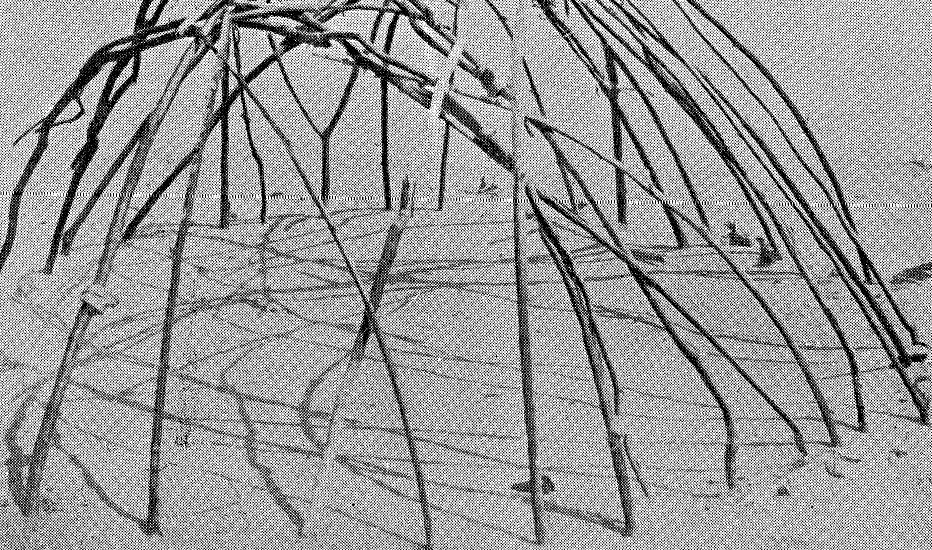
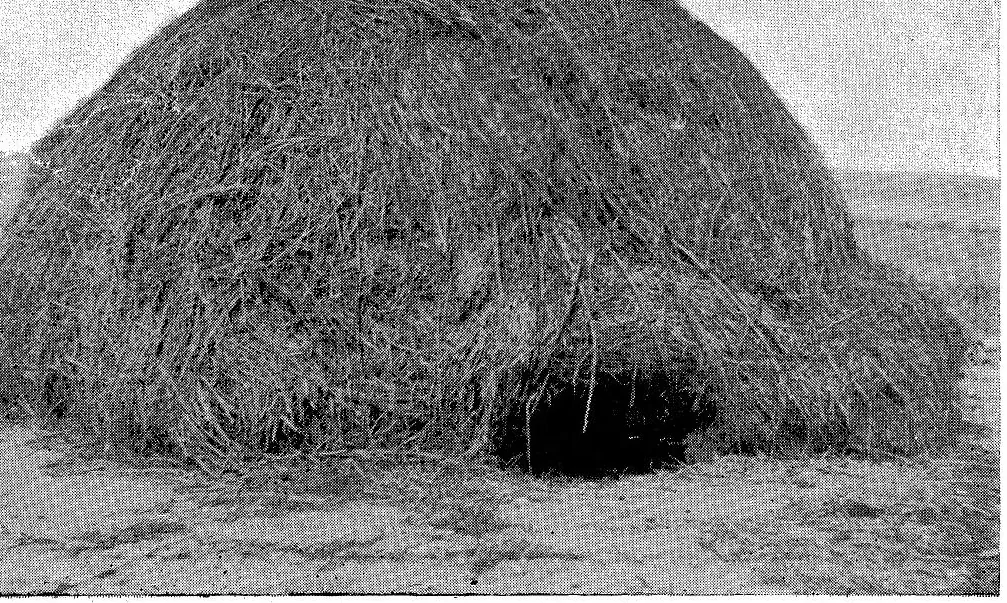
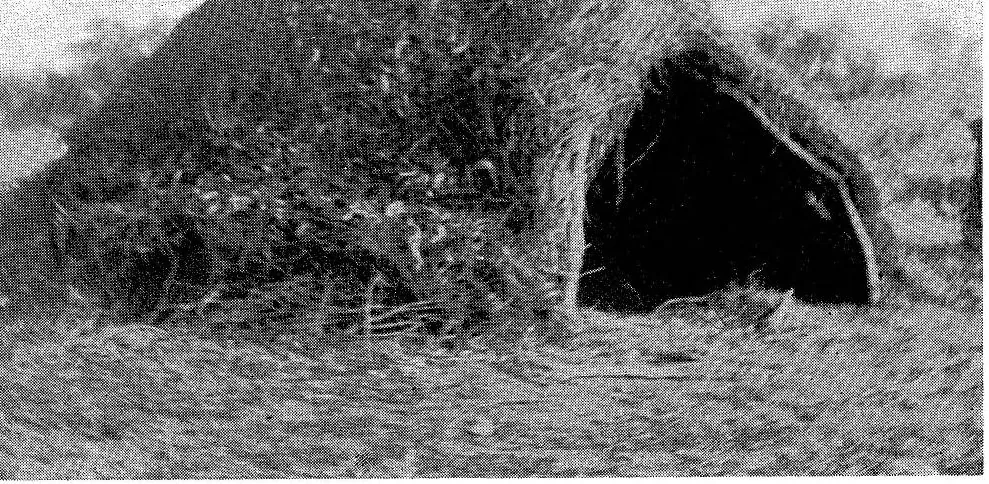
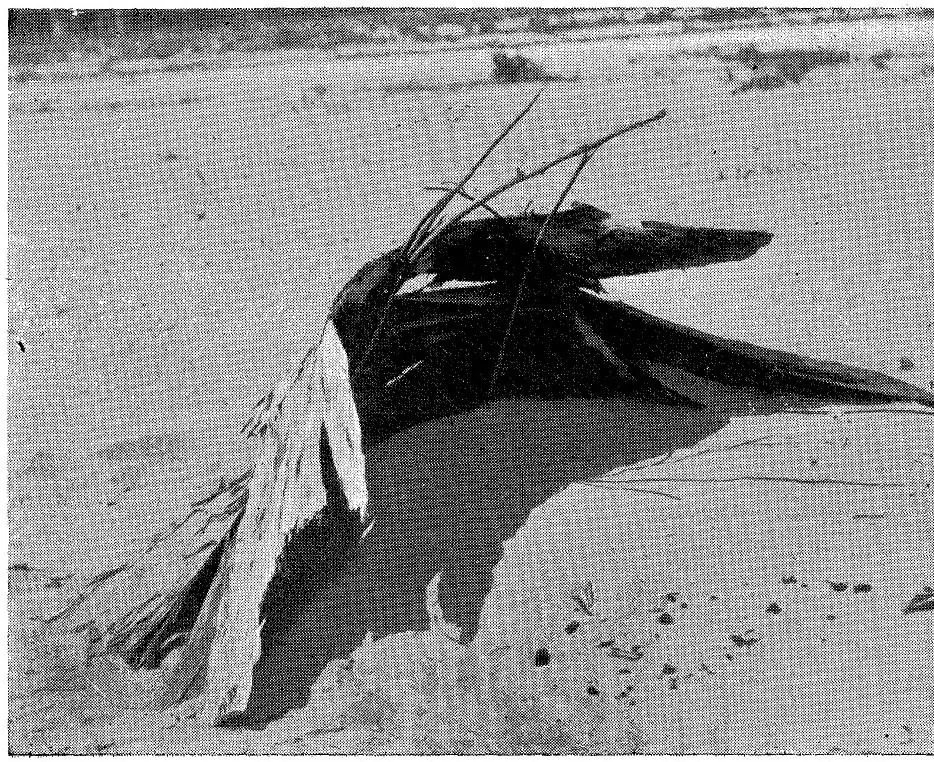
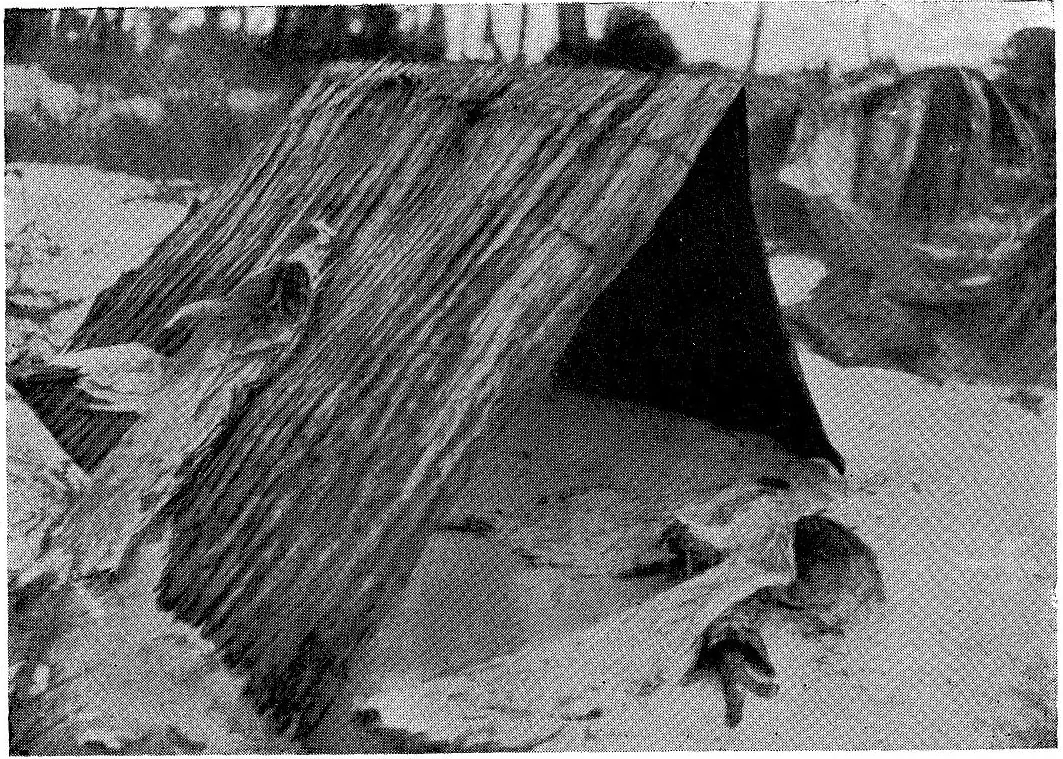
A bayan is 'house, camp, shelter', and the Kuku Yalanji house was the warrbi, the 'beehive house' of grass: a dome of saplings stuck in the ground, bent over and tied into crossing hoops, thatched from the top down with leaves, grass or bark and weighed down with logs[1][2]. Roth, who recorded these huts from Cape Grafton to Princess Charlotte Bay in 1898–1900, photographed the frame and the finished house; his pictures are on this page[2]. In the dry country of the Peninsula the house was a bark sheet over a ridge-pole on forked posts, or a raised sleeping platform with a smoky fire beside it against the mosquitoes[2]. This page covers the kinds of shelter, how the beehive hut was built, the bark and ridge-pole shelters of the dry country, and the words; where camps were put on each stretch of country is under its place.
Hann River Cape York
Possum People's country on the upper river and Thaypan (Kuku Thaypan) country downstream: stringybark and bloodwood woodland and a spring-fed sandy river that runs north-east from the Great Dividing Range, past the Peninsula Developmental Road, into Rinyirru (Lakefield) and the North Kennedy. Not Kuku Yalanji country: the Kuku Yalanji words on this page are the dictionary's, not the Hann's own languages. Place guide
Roth's best records of houses near the Hann come from the river it flows into and the plains below. On the Kennedy River he watched a palm-leaf hut being built, and in the hinterland of Princess Charlotte Bay he found the raised sleeping platform 'common'[2]. The Kuku Thaypan Elders of the middle and lower Hann made their humpies of messmate bark, taken 'certain time after wet'[8].
The houses of this country
The Kennedy River palm-leaf hut (Roth, c. 1900): the head of the local group built it for himself and his wives, of 'Cabbage-tree' palm leaf (Livistona). One withe bent into a hoop and fixed in the ground at both ends made the doorway; a second, tied across it at right angles, carried the rest of the withes; bent sticks strengthened the dome; and 'heavy timbers fixed firmly into the ground and pressing at an angle' held the leaves down. Roth's photograph of it is Plate xvii, fig. 2[2].
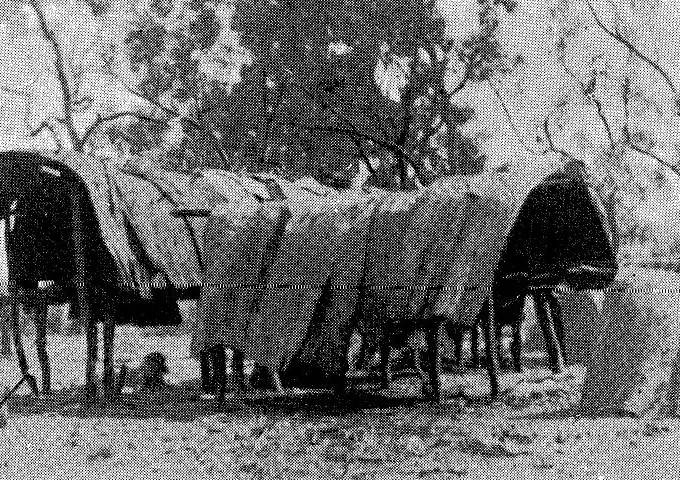
The sleeping platform (hinterland of Princess Charlotte Bay; Roth's photograph is from the lower Normanby): short sticks across two ridge-poles on forked posts, five to six feet high, with a sheet or two of bark on top, room for three or four people, a forked limb for a step, and a fire in front, 'never built immediately beneath', whose smoke 'keeps the sleepers free from mosquitoes'. Its names: Koko-warra barpur, Koko-lama-lama arrianggar, Koko-rarmul ngamba[2].
The dome hut around the shores of Princess Charlotte Bay had 'over a dozen' crossed hoops[2].
Camps through the year here
The Hann country has a hard wet: about 1,174 mm a year at Musgrave, most of it from December to March[9], when 'heavy rains cause the rivers to flood'[10]. In the Laura River valley people camped through the wet season 'under rock shelters on the high ground', where their rock art is[8]. Bark for a humpy comes off only after the wet: 'You only get certain time after wet'[8].
Huts in children's play
On the upper Normanby, children playing at being married built 'an impromptu hut' and sat in its shade, until a boy rushed in to steal the wife[11].
A messmate-bark humpy
Kuku Thaypan Elder Dr George Musgrave, recorded in 2003, on the messmate, Ku Aldkalemba: 'build a house with it. Old People have a look, you know how he look, see in there. That mean to take the bark off now ready to make a house, humpy. You see hard, you cannot get him. You only get certain time after wet'[8].
On country today
The upper Hann is the Possum People's country and the middle and lower Hann are Thaypan country, both determined in November 2023[12][13]. Camping on their country is by their leave.
Upper Mitchell Western Yalanji
Western Yalanji country west of the Great Dividing Range: dry open woodland cut by the sandy, paperbark-lined upper Mitchell River, around Karma Waters and Mount Carbine. Place guide
Where the Palmer meets the Mitchell, downstream of Karma Waters, in the country the Western Yalanji share with their western neighbours, Sub-Inspector Garraway told Roth of a different house, and photographed it in 1899: a sleeping platform on forked posts, roofed with bark, raised between six inches and three feet off the ground against the mosquitoes[2].
Where to camp here
Sand and shade by the pool in the dry, the ridge in the wet: the same logic that put the Bloomfield camps on the creek sand and the ridges picks a camp at Karma Waters today[3].
Materials here
At Karma Waters the frame trees are the wattles and the river's saplings, the barks are on the woodland and paperbark pages, blady grass is a wanted page, and the pandanus of the river banks gives the forked posts[14][2].
Safety here
Cutting bark from standing trees on the station is a matter for the lessee's permission[15].
On country today
The station's river camps run from 1 April to 30 November, on the sand by the pools where the dry-season camps always were[16][3]. The right to camp on country is recognised in the Western Yalanji determinations[17].
Eastern coast Eastern Kuku Yalanji
Eastern Kuku Yalanji country: rainforest, beaches, mangroves, reef and the short steep rivers from the Daintree to the Bloomfield and the Annan.
At Bloomfield the dry-season camps were on the sandy beds of the smaller creeks and the wet-season camps on the ridges above the floods; house-building was normally women's work; the hut sapling of choice was Burdekin plum, the inland roof was palm leaf or messmate bark cut after the first storms, and a fire burned inside[3][2].
The Bloomfield house
Anderson's Bloomfield informants in the 1970s said young saplings of the Burdekin plum were 'particularly favoured for hut construction, but that any flexible saplings would suffice'; for the inland huts, 'if palm leaves were unavailable, bark from the "Messmate" tree, Eucalyptus tetrodonta, was used'; and, citing McConnel, that house-building 'was normally the job of the woman'[3]. The household rule Roth recorded on the Bloomfield: a man with one wife and a small family has a hut with one entrance; a bigger household has a larger hut, and the senior wife 'a separate entrance and separate fire to herself'[2].
Camp sites
At Bloomfield, dry-season camps 'were in the sandy beds of the smaller dry creeks or on the sandy terraces above the running creeks', and wet-season camps 'on the ridges between creek gullies, well above flood level, but not too far from water supplies'[3].
The camp round
The camp was placed by water, shade, flood and mosquitoes, and moved with the seasons: the Bloomfield round ran between permanent beach camps and inland camps on the creeks, with the big dry-season processing camps of up to a hundred people beside the zamia creeks[3].
Seasons
Bark sheets for the inland huts 'were cut and peeled off the trees when the sap had arisen after the first storms in December', then 'pounded with stones and smoked with the fire until flat'[3]. Dry-season camps on the creek sand, wet-season camps on the ridges[3].
Everywhere
Names
bayan 'house, camp, shelter' is the general word; Roth recorded the hoop-framed hut at Cape Bedford as bayen, its hoops as karar and its doorway as barkar, 'mouth'[1][2]. warrbi is the 'house made of grass, "beehive house"', and also an axe; wurun is 'humpy'[1]. bira and kilili are both 'windbreak'; jiji is 'roof of house; the top of anything'; karrngka 'a crack in a house'; dimbi 'behind the house'; ngalkal 'outside'[1]. Materials: bajarr, 'loya vine fern leaves, used in making mia-mia'; wanjakan, a ti-tree whose 'bark [is] also used for roof of house'; buyku paperbark; the stringybarks warka and marbaji; yulal 'board, plank'[1]. And balnji, 'camping out', which also means 'doing something right'; yamba-yamba 'household goods, collection of personal things'; kakarr 'grass; blanket to lie on'[1].
The kinds of shelter
Roth set the shelters of North Queensland out from the simplest to the most built[2]:
- The windbreak (bira, kilili): bundles of grass, leafy switches or bloodwood boughs thrown down in a half circle round a sleeping hollow and a fire; or switches stuck upright in the ground and interwoven; or, on the lower Tully, a sapling tied at an angle to a tree with leafy switches leant against it[2][1].
- The single bark sheet: one sheet set lengthways and edgeways in the ground, or bent over at the middle with its ends fixed in the soil. Simple, Roth notes, but it already needs tree-climbing, bark-stripping and tools[2].
- The ridge-pole shelter of the dry Peninsula: a ridge-pole on two forked uprights, very often pandanus, with a sheet or sheets of bark over it; then two ridge-poles; then cross-sticks over the poles to make a bunk to sleep on by night and shade under by day[2].
- The sleeping platform, five or six feet high, with a forked limb as a step and a smoky fire near, never under, it, against the mosquitoes; common in the hinterland of Princess Charlotte Bay, and at the junction of the Palmer and Mitchell Rivers, where Sub-Inspector Garraway told Roth the platform was fixed between six inches and three feet up and roofed over with bark into a raised house[2].
- The dome hut, the warrbi: along the coast from Cape Grafton through the Bloomfield River and Cape Bedford to Princess Charlotte Bay, saplings or switches are 'firmly stuck into the ground along the limits of the area to be enclosed, and then bent over and tied, not interlocked, so as to form a series of hoops crossing one another', strengthened with transverse and oblique pieces fixed in and out. At Cape Bedford five or six crossed hoops; at Princess Charlotte Bay more than a dozen. The thatch is 'bark, blady-grass, lawyer-vine, cycad- or palm-leaf according to the local vegetation', and 'certainly both on the Bloomfield River and at Cape Grafton, the leaves are invariably commenced with from the top, succeeding layers being placed from above down, heavy boughs or rather logs weigh them into position, the rain being kept out not so much owing to the arrangement of the leaves as to the quantity put on'. Height about four to four and a half feet, no floor excavation, a fire inside when built for winter, one or two entrances by the size of the household[2].
Which shelter for which weather
- Fine dry nights: a windbreak and a fire, or nothing; Roth noticed that people who slept without a hut rose at first light[2].
- Sudden rain: the Boulia winji-winji, 'any temporary bough-shed for protection from rain should it suddenly come up', of light sticks, grass and bushes[2].
- Cold season: the dome hut with the fire inside, which is why it was 'built for winter-use'[2].
- Mosquito country by the river: the raised platform, with a smoky fire alongside[2].
- The wet: the big leaf-thatched dome on a ridge above the flood line; see each place below for where people camped[3].
- Bark or grass? Bark where the stringybarks, messmate, boxwood and ironwood grow and the sap is up; blady grass and lawyer-vine or palm leaf in the rainforest; the Koko-minni of the middle Palmer used ironwood, teatree and messmate or boxwood bark[2][3].
Signs
- Scarred trees where bark sheets were taken; see bark troughs[4].
- Sand thrown up five or six inches round the base of a bark-thatched hut, to stop the bark springing out, leaves a low ring on the ground long after the hut is gone[2].
- A sleeping hollow ringed with old grass bundles was the simplest camp of all[2].
- The old photographs on this page show what to look for: the ring of switch-butts in the ground, the heavy logs on the thatch, the forked posts of a platform[2].
Materials from the country
Frame: flexible saplings, Burdekin plum preferred at Bloomfield; heavy saplings in the north-west; pandanus forks for ridge-pole uprights[3][2]. Thatch: blady grass two and a half to three feet long; the leaves of lawyer vine and fan palm; cycad fronds; cabbage-tree palm; teatree bark; and in the dry country the barks of ironwood, messmate, boxwood and teatree[2]. Ties: split cane[2]. Weights: heavy boughs and logs[2].
The camp in the country
The camp was placed by water, shade, flood and mosquitoes, and moved with the seasons. Fire was 'a central part of domestic camp life', lit with the firestick, kept inside the dome hut in the cold, and burned smoky beside a platform for the mosquitoes[3][2]. The hut's thatch came from the same plants as the dilly bags and string, its bark from the same trees as the troughs, cut with the same axes in the same storm season[3][4]. Snakes, goannas and the small lizards of the leaf litter share any camp; the dictionary's kulmba-kulmba is 'gecko, small house lizard'[1].
Seasons
The dome hut was the winter house, built with its fire inside[2]. When bark was cut and where camps were moved differs from place to place: see each place below. See the year on country.
Uses
Shelter from rain, wind, cold and mosquitoes; shade by day; a place for the fire; and a place that tells who lives there, by its size and the number of its doors[2]. The platform houses of the Palmer–Mitchell junction lifted sleepers off the wet ground and out of the mosquito layer[2]. The boys' initiation hut was a much larger grass-thatched building, which this page leaves to the families concerned[2].
Building the beehive hut
From Roth's account of the coast from Cape Grafton to Princess Charlotte Bay, with the Bloomfield details, and Anderson's materials[2][3]:
- Mark the floor: an oval, big enough for the household, no digging[2].
- Cut flexible saplings, Burdekin plum if you have it, 'any flexible saplings' if not[3].
- Stick them firmly into the ground round the edge of the floor, leaving a gap for the door, or two gaps for a big household[2].
- Bend each pair over and tie them, not interlocked, into hoops that cross one another; five or six crossed hoops for a small hut, a dozen or more for a big one[2].
- Strengthen the dome with pieces tied across and obliquely, in and out of the hoops[2].
- Start the thatch at the top. On the Bloomfield the leaves 'are invariably commenced with from the top', each layer placed from above down, so the rain runs off every layer onto the one below[2]. For grass thatch (lower Tully method): handfuls of blady grass laid butts-down against the frame all the way round, then a layer butts-up, both fixed with a split cane tied round the hut; then single rows fixed with cane as you go, spiralling up to the top; cap the top with teatree bark or palm leaves[2]. For bark: a long sheet round the base, vertical sheets with their ends tucked into the frame over it, horizontal pieces on top[2].
- Put on plenty. The rain is kept out 'not so much owing to the arrangement of the leaves as to the quantity put on'[2].
- Weigh it down with heavy boughs or logs laid over the thatch; for bark, a log or two, and sand thrown up round the base[2].
- Light the fire inside in the cold, and keep the door toward where you came from, as the Brisbane huts did[2].
A dry-country bark shelter (Peninsula and Palmer): two forked posts, pandanus if you can, a ridge-pole between, bark sheets over; add a second ridge-pole and cross-sticks and it becomes a bunk by night and shade by day[2]. A platform house (Palmer–Mitchell junction): the bunk raised on longer forked posts, six inches to three feet up, enclosed with two more ridge-poles and roofed with bark[2].
Safety
- Camp above the high bank from November: a dry creek bed is a river within hours of a storm upstream[3].
- Not under dead limbs, which the fires and the cockatoos leave.
- A fire inside a grass hut is how it was done, in winter, by people who tended it all night; a sleeping camp with a dry-grass thatch and a wind is how fires start[2][5].
- Snakes come to camps for the mice and frogs the camp attracts; see snakes.
- Scarred trees are protected heritage[6].
On Country today
Native title holders' right to camp on country is among the rights protected by section 211 of the Native Title Act 1993[7]. Roth's photographs are the record of what the houses looked like; the knowledge of how to put one up is still in the hands that have done it, and the contribution box below is for that.
Language
bayan 'house, camp, shelter'; warrbi 'beehive house'; wurun 'humpy'; bira, kilili 'windbreak'; jiji 'roof'; karrngka 'crack in a house'; dimbi 'behind the house'; ngalkal 'outside'; bajarr 'loya vine fern leaves, used in making mia-mia'; wanjakan ti-tree 'bark also used for roof of house'; yulal 'board, plank'; balnji 'camping out'; yamba-yamba 'household goods'; kakarr 'grass; blanket to lie on'; jukar 'sand'[1].
Images
References
- Hershberger, H. D. & Hershberger, R. (1982). Kuku-Yalanji Dictionary. Work Papers of SIL-AAB, Series B, Volume 7. With Toby Bloomfield, Roy Friday, Billy Roberts, Hector and Doris Sykes, Joe Walker and others. www.sil.org/resources/archives/18038
- Roth, W. E. (1910). North Queensland Ethnography, Bulletin No. 16: Huts and shelters. Records of the Australian Museum 8(1): 55–66, plates xi–xvii. archive.org/details/records-australian-museum-8-055-066
- Anderson, C. (1996). Traditional material culture of the Kuku-Yalanji of Bloomfield River, North Queensland. Records of the South Australian Museum 29(1): 63–83. Based on fieldwork at Wujal Wujal in the late 1970s and early 1980s. — Hunting (spears, spear-throwers, harpoons); fishing (stupefacients); manufacturing (gums and resins); post-contact bush component archive.org/details/RecordsSouthAus29Sout
- Roth, W. E. (1904). North Queensland Ethnography, Bulletin No. 7: Domestic implements, arts, and manufactures. Brisbane: Government Printer. — Sect. 10 'Fire-tongs' archive.org/details/northqueensland00landgoog
- Queensland Fire Department. Fire permits: lighting fires in Queensland. fire.qld.gov.au/safety-education/using-fire-outdoors/lighting-fires-in-queensland
- Aboriginal Cultural Heritage Act 2003 (Qld), sections 23–25 (cultural heritage duty of care; harming, excavating, relocating or taking away Aboriginal cultural heritage). www.legislation.qld.gov.au/view/html/inforce/current/act-2003-079
- Australian Law Reform Commission. Review of the Native Title Act 1993 (DP 82), ch. 8: Relevant provisions in the Native Title Act (s 211). www.alrc.gov.au/publication/review-of-the-native-title-act-1993-dp-82/8-the-nature-and-content-of-native-title/relevant-provisions-in-the-native-title-act/
- Standley, P.-M. (2019). The importance of campfires to effective conservation. PhD thesis, James Cook University. Records the fire and country knowledge of Kuku Thaypan Elders Dr Tommy George and Dr George Musgrave. — pp. 302–303 (wet-season camps under rock shelters, after Trezise); pp. 406–407 (Dr George Musgrave on messmate bark for a humpy, 2003) researchonline.jcu.edu.au/64274/
- Bureau of Meteorology. Climate statistics for Australian locations: Musgrave (station 028007, 79 m), 1887–2012. www.bom.gov.au/climate/averages/tables/cw_028007.shtml
- Queensland Parks and Wildlife Service. Nature, culture and history: Rinyirru (Lakefield) National Park (CYPAL) (web page, last updated 1 July 2024; accessed 28 October 2026). parks.qld.gov.au/parks/rinyirru-lakefield/about/culture
- Roth, W. E. (1902). North Queensland Ethnography, Bulletin No. 4: Games, sports and amusements. Brisbane: Government Printer. — Imitative games, upper Normanby River (the impromptu hut) archive.org/details/northqueensland00landgoog
- Ross on behalf of the Cape York United #1 Claim Group v State of Queensland (No 21) (Possum determination) [2023] FCA 1316 (Federal Court of Australia, 2 November 2023). — Determination area (upper Hann and Kennedy rivers); prescribed body corporate; affidavit evidence on hunting and fishing www.judgments.fedcourt.gov.au/judgments/Judgments/fca/single/2023/2023fca1316
- Ross on behalf of the Cape York United #1 Claim Group v State of Queensland (No 20) (Thaypan determination) [2023] FCA 1315 (Federal Court of Australia, 2 November 2023). — Determination area and waters; prescribed body corporate (Awu-Laya Indigenous Corporation); affidavit evidence on hunting www.judgments.fedcourt.gov.au/judgments/Judgments/fca/single/2023/2023fca1315
- Atlas of Living Australia. Plant occurrence records within 30 km of the Karma Waters homestead (16.62°S, 144.60°E), queried 10 October 2026: 832 records of 266 species. biocache.ala.org.au/occurrences/search?q=kingdom:Plantae&lat=-16.62&lon=144.60&radius=30
- Karma Waters Station. About: location, native title (web page, accessed 5 October 2026). www.karmawatersstation.com/about.html
- Karma Waters Station. Bush Camping at Karma Waters Station (web page, accessed 5 October 2026). www.karmawatersstation.com/bush-camping.html
- Western Yalanji Aboriginal Corporation & CRC for Developing Northern Australia (2020). Western Yalanji Land Use and Economic Diversification Plan. CC BY 4.0. — Native Title Determinations 1–4 (pp. 13–18); ‘Fire Management and Carbon Farming’ (pp. 32–33); ‘Pastoralists’ crcna.com.au/wp-content/uploads/2024/05/westernyalanjilanduseplan_nov2020.pdf
From the community
Know this one? Add the words you use for it, what it is for, how it is done, a correction, or a photo from country. It shows here straight away with your name on it. Please keep anything restricted or sacred off the site.
Loading…