Birds
Bush birds of the woodland
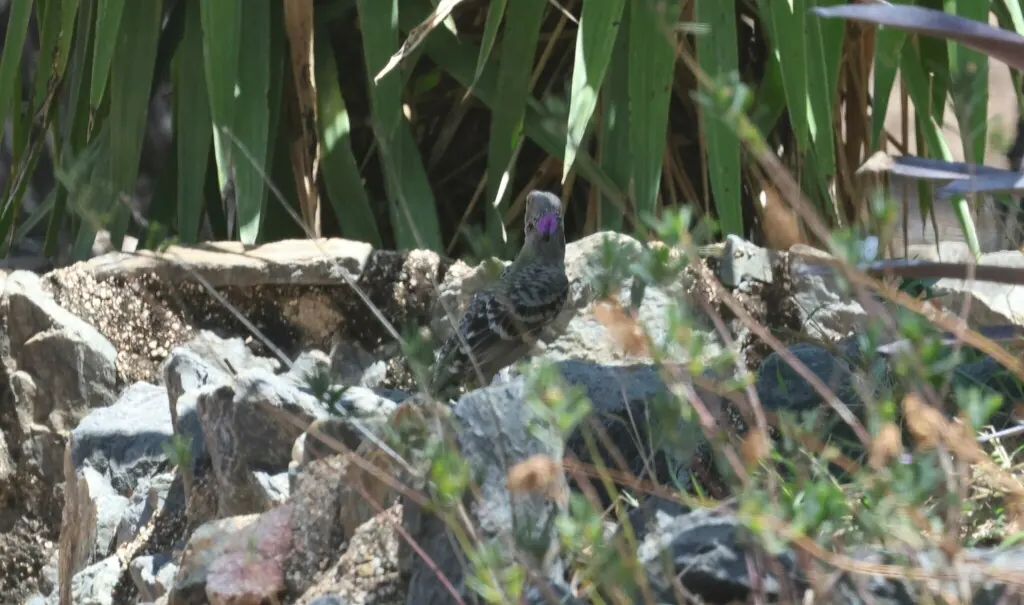
These are the birds of every camp and every walk: kalbu and waja the crows, dawadawa and kurburrubun the magpie, kurkunbay the 'butcherbird, stockwhip bird', bajal the bowerbird that collects white things, biru-biru the 'bee eater, rainbow bird', jaka the friarbird, binjurrbinjurr a honeyeater, kuyir the 'bush curlew' that wails at night, bulnja the 'frogmouth, mopoke', kalkuy, yiki and julurr-julurr the owls, jiwurrmal the 'pheasant cuckoo', mabal and yurmbil the swallows and jangkan the swift[1]. The woodland page has their place in the whole; this page is the birds themselves. Roth's east-coast rule for small birds was that 'it is the eggs and fledgelings which are rather sought for', pulled from the nests with a hooked stick, and the Tully people limed the roosts with fig-sap[2].
Nothing is written for the Eastern coast on this page yet. What follows is true across the country.
Hann River Cape York
Possum People's country on the upper river and Thaypan (Kuku Thaypan) country downstream: stringybark and bloodwood woodland and a spring-fed sandy river that runs north-east from the Great Dividing Range, past the Peninsula Developmental Road, into Rinyirru (Lakefield) and the North Kennedy. Not Kuku Yalanji country: the Kuku Yalanji words on this page are the dictionary's, not the Hann's own languages. Place guide
The bush birds of the Hann are mostly the same birds as the Mitchell's. The Atlas of Living Australia holds 61,337 bird records, from 1896 to 2026, in a box of about 90 × 85 km around the middle Hann, Laura and western Rinyirru[33]. The upper Hann is Possum People's country and the middle and lower Hann are Thaypan country[34][35].
Which ones live here
Of this page's birds, the box holds 1,721 blue-faced honeyeater records, 1,711 friarbirds, 1,611 crows, 1,399 magpie-larks, 1,043 rainbow bee-eaters, 964 great bowerbirds, 723 black-throated and masked finches, 688 grey-crowned babblers, 553 pied butcherbirds, 517 magpies and 495 double-barred finches. At night there are 267 frogmouth, 220 owl (Ninox) and 127 bush stone-curlew records. The apostlebird is scarce here (35 records), and the Gouldian finch has only 3 (2013–2018)[33].
How they live here
Butcherbirds and the golden-shouldered parrot. On Kuku Thaypan country, where hot late-dry fires have let the broad-leaf tea-tree thicken, 'there are perches closer to the ant beds where the parrots nest, and fledgling parrots are preyed upon by the pied butcher birds'[36]. The Elders' answer is the right fire at the right time; see cockatoos and parrots for the parrot.
People and the bush birds here
No record of taking these small birds or their eggs has been published for the Possum or Thaypan peoples of the Hann; Roth's egg-and-fledgling record in the general sections is from the east coast[2]. The bush bird the Possum People named in their native title evidence is the 'plain turkey', the bustard[34]. The curlew, the owl and other birds are in the stories Dr George and the Kuku Thaypan Elders told on country[36]; those stories belong to their custodians.
On country today
The threatened species the Kuku Thaypan Elders list for their country include the Gouldian finch, the crimson finch and the northern masked owl[36]. Cool burning that keeps the grass seeding and the hollows standing is what these birds need[36][27].
Language
Of these birds, Standley records the Kuku Thaypan (Awu Alaya) name Nhye ratamol 'Pheasant'[36]. Other Kuku Thaypan bird names are on the ducks and geese page.
Upper Mitchell Western Yalanji
Western Yalanji country west of the Great Dividing Range: dry open woodland cut by the sandy, paperbark-lined upper Mitchell River, around Karma Waters and Mount Carbine. Place guide
At Karma Waters the Atlas's most-recorded land birds are the Torresian crow, the magpie-lark and the rainbow bee-eater at sixty-four records each, the striated pardalote, the magpie, the pied butcherbird, the apostlebird, the blue-faced honeyeater, the double-barred and black-throated finches, the great bowerbird, the willie wagtail, the pale-headed rosella, and, in the night, the bush stone-curlew, the tawny frogmouth, the boobook and the barking owl[25].
Which ones live here
Within 30 km of the homestead the Atlas has the Torresian crow, magpie-lark and rainbow bee-eater (64 records each), striated pardalote (57), magpie (53), pied butcherbird (51), apostlebird (50), blue-faced honeyeater (49), double-barred finch (48), great bowerbird and willie wagtail (46 each), black-throated finch (43), noisy and little friarbirds (33 each), grey-crowned babbler (25), pheasant coucal (13), tawny frogmouth, boobook, dollarbird and channel-billed cuckoo (7 each), and bush stone-curlew, barking owl and owlet-nightjar (5 each)[25]. Brown, white-throated, yellow and rufous-throated honeyeaters fill out the forty-odd species of blossom birds in the list[25]. The northern black-rumped form of the black-throated finch is the one here[16]. The Gouldian finch has four records within 30 km of the homestead, which makes Karma Waters one of the places this bird still lives[17][25]. The masked finch, six, and the crimson finch are in the list too[25].
On country today
These are the birds the station lives with, and the Gouldian finch is the one that makes Karma Waters' grass and hollows matter beyond the station[25][17]. Hunting by native title holders for personal, domestic or non-commercial communal needs is recognised in the Western Yalanji determinations[37].
Everywhere
Names
Crows: kalbu 'black crow', waja 'species of crow' (also 'big yellow March fly'), wakuka 'species of crow' (also 'kookaburra'). Magpie: dawadawa, kurburrubun. Butcherbird: kurkunbay and karkunbay 'butcherbird, stockwhip bird'. Bowerbirds: bajal 'bower bird', jurriyan 'satin bower bird'. Bee-eater: biru-biru 'bee eater, rainbow bird', dibirr-dibirr 'rainbow bird, honey eater'. Honeyeaters: jaka 'friarbird (leather-head)', binjurrbinjurr 'honey eater bird'. Night birds: kuyir 'bush curlew', bulnja 'frogmouth, mopoke', kalkuy and yiki 'night owl', julurr-julurr 'moomoo birds, night owl, night hawk', jiral-jiral 'night bird'. Coucal: jiwurrmal 'pheasant cuckoo', also called bulbul. Swallows and swifts: mabal, yurmbil 'swallow', jangkan 'swift'. Others: dakwul-dakwul, a 'brown and white scrub bird' whose males 'clear an area, then many form a circle with one in the middle and the middle one will sing and dance', barinkan 'scrub bird, dark grey with white breast', mirrki 'kidney bird', dikal 'bird'[1]. The dictionary also lists a 'messenger night bird' and a 'black messenger bird' with their meanings; this page leaves those to the dictionary.
The bush birds
Torresian crow (Corvus orru, kalbu). 'A large corvid, about the same size (48–53 cm in length) as the Eurasian carrion crow but with a more robust bill and slightly longer legs. The plumage of the Torresian crow is glossy black on the back and dull black on' the underside, with a white eye; it 'occupies almost any habitat within its geographic range where there is a permanent source of water'[3].
Australian magpie (Gymnorhina tibicen, dawadawa). 'A fairly robust bird ranging from 37 to 43 cm in length, with black and white plumage, gold brown eyes and a solid wedge-shaped bluish-white and black bill'; 'described as one of Australia's most accomplished songbirds, the Australian magpie has an array of complex vocalisations. It is omnivorous, with the bulk of its varied diet made up of invertebrates. It is generally sedentary and territorial'[4]. Pied butcherbird (Cracticus nigrogularis, kurkunbay): 'a black-and-white bird', 'common in woodlands and urban environments, it is carnivorous, eating insects and small vertebrates', and the best singer of the woodland dawn; the 'stockwhip' of the dictionary's gloss is its whip-crack whistle[5][1]. Magpie-lark (Grallina cyanoleuca), the peewee, black and white, building a mud bowl on a branch[6].
Apostlebird (Struthidea cinerea). 'A quick-moving, gray or black bird about 33 cm long', 'also known as the grey jumper, lousy jack or happy family', in family groups of a dozen that build and guard mud nests together[7]. Grey-crowned babbler (Pomatostomus temporalis), the other noisy family bird, hopping through the undergrowth in gangs[8].
Great bowerbird (Chlamydera nuchalis, bajal). 'The largest of the bowerbird family and is 33 to 38 cm long and fawny grey in colour. Males have a small but conspicuous pink crest on the nape of the neck.' 'The bower is a twin-walled avenue-type bower approximately 1 metre long and 45 cm high. It is typically located under a shrub or leafy branch. The ends of the bower are scattered with white and green objects, stones, bones, shells and leaves and small man-made objects such as plastic and bottle caps'; 'the males spend most of the year building, maintaining, improving, defending, and above all displaying from their bowers'[9].
Rainbow bee-eater (Merops ornatus, biru-biru). 'Brilliantly coloured birds that grow to be 23–28 cm in length, including the elongated tail feathers'; 'the upper back and wings are green, and the lower back and under-tail coverts are bright blue'; they 'migrate north during the winter into northern Australia', hawk bees, wasps and dragonflies over the river in the evening, and nest in tunnels in sand banks[10]. The dollarbird (Eurystomus orientalis) is the other wet-season hawker, 'seen singly with a distinctive upright silhouette on a bare branch high in a tree, from which it hawks for flying insects' between September and April[11].
Honeyeaters. The blue-faced honeyeater (Entomyzon cyanotis), 'colloquially known as the bananabird', 'found in open woodland', with a diet 'mostly composed of invertebrates' and the blossom besides, and the first voice before dawn[12]. The noisy friarbird (Philemon corniculatus, jaka), 'a large honeyeater with dull brownish grey upperparts ... Its black head is completely bald apart from tufts of feathers under the chin', with 'its rounded knob above the black bill', the 'leather-head' of the dictionary's gloss; the little friarbird is the one without the knob[13][14][1].
Finches. The double-barred finch (Stizoptera bichenovii), 'a 10–11 cm long munia-like bird. It has a white face bordered with black', 'the owl finch'; 'granivorous and highly gregarious. Nests are built in grass, bushes or low trees'[15]. The black-throated finch (Poephila cincta), 'around 10 cm in length ... a short black bill, lores, and throat, sharply delineated from the rest of the pale grey head', 'found in grassy woodlands throughout north-east Australia' and gone from the south[16]. The Gouldian finch (Chloebia gouldiae), 'about 125–140 mm long. Their heads may be red, black, or yellow', 'considered an Endangered species by the Australian Government' under the EPBC Act[17].
The night. The bush stone-curlew (Burhinus grallarius, kuyir), 'a large, ground-dwelling bird endemic to Australia. Its favoured habitat is open plains and woodlands, where it stalks slowly at night in search of invertebrates such as insects. Its grey-brown coloration is distinguished by dark streaks', and its wail is the sound of the dark[18]. The tawny frogmouth (Podargus strigoides, bulnja), 'a big-headed, stocky bird often mistaken for an owl due to its nocturnal' habits, '34 to 53 cm long', sitting as a broken branch by day; 'it was sometimes mistakenly called a mopoke', the boobook's name, 'the call of which is often confused with that of the tawny frogmouth'[19]. The Australian boobook (Ninox boobook), 'the smallest owl on the Australian mainland ... 27 to 36 cm long, with predominantly dark-brown plumage with prominent pale spots', calling 'mo-poke'[20]; the barking owl (N. connivens), which 'takes its name from its characteristic barking voice', 'brown with white spots on its wings and a vertically streaked chest', with yellow eyes[21]; and the owlet-nightjar, 'the smallest nocturnal bird found in Australia', in a hollow by day[22].
Pheasant coucal (Centropus phasianinus, jiwurrmal). 'A large heavy-set bird adapted for living on the ground, reminiscent of a pheasant in shape. Birds in breeding plumage have black heads, necks, breasts and bellies, barred chestnut wings and long black, brown and cream barred tails'; the woodland page has its diet of small reptiles, frogs, eggs and nestlings and its grass nest with the stems tied over it[23]. The channel-billed cuckoo (Scythrops novaehollandiae), 'the world's largest cuckoo', '56–70 cm long', arrives with the storms, screams over the camp at night, and lays in the crows' nests[24].
Black-and-white birds, and the night
- Crow: all black, white eye, 'aah-aah'[3].
- Magpie: black and white with a white nape and a big bill; carolling[4].
- Pied butcherbird: black hood, white collar, hooked bill, a flute[5].
- Magpie-lark: small, black and white, a mud nest, 'pee-wee'[6].
- Willie wagtail: small, black above and white below, wagging, in every camp[25].
- Apostlebird and babbler: grey or brown gangs on the ground, never alone[7][8].
- Frogmouth or owl: the frogmouth has a wide frog's bill and sits upright as a stump; the boobook has the owl's face and eyes and calls 'mo-poke'; the barking owl barks[19][20][21].
- Curlew: a long-legged grey bird standing dead still by day under a tree, and the wail at night[18].
Signs
- A bower of twigs with white bones and green glass at its ends under a shrub[9].
- Mud nests on a horizontal branch: apostlebirds or magpie-larks[7][6].
- A round grass nest with a tube in a gum: a finch[16].
- Bee-eater tunnels in a sand bank over the river[10].
- A wail at night is the curlew; a bark is the owl; 'mo-poke' is the boobook[18][21][20].
- Magpies and butcherbirds mobbing one spot: a snake or a goanna[4].
- A ring cleared on the ground with birds dancing in it: the dictionary's dakwul-dakwul[1].
Where they are
The open woodland and its edges, the river's banks for the bee-eaters, the grass for the finches and the coucal, the camp itself for the crows, magpies, butcherbirds, wagtails and apostlebirds, and the dark for the curlew and the owls[26][10][18]. The Gouldian finch needs seeding grass and hollows near water, which is the woodland the fire regime of the woodland page is for[17][27].
The camp's birds
The crows, magpies, butcherbirds, wagtails and apostlebirds are the birds that live off the camp and the stock as they lived off the old camps: scraps, flies, the grasshoppers the cattle put up[3][4]. The honeyeaters, lorikeets and bee-eaters are the blossom's and the river's; the finches the grass seed's; the butcherbird and the magpie the lizards' and small snakes'; the owls the mice's and the possums'; the coucal the frogs' and nestlings'[12][16][5][23]. The goshawk and the pythons take them; the cane toad takes the frogmouth and the curlew that swallow it[28][29].
Seasons
The bee-eaters and the dollarbird come north for the dry and the storms; the finches breed after the monsoon on the new seed; the bowerbird builds all year and displays before the rains; the cuckoos arrive and scream with the first storms[10][11][16][9][24]. See the year on country.
Uses
- Eggs and fledglings, the east coast's small-bird food, taken from the nests with a hooked stick carried down the back[2].
- Bird-lime on the roosts and in the blossom, the Tully method, for 'peewits, small parrots, and even young cockatoos'[2].
- Sentries: the magpies and butcherbirds on a snake, the curlew's and the lapwing's night alarms[4].
- A clock: the honeyeater half an hour before light, the butcherbird at dawn, the boobook at dark[12].
Living with the bush birds
- Let the magpies and butcherbirds work the camp; they are the snake alarm and the fly control[4].
- Find the bowers under the shrubs and leave the bones and glass where the bird put them[9].
- Watch the finches on the seeding grass; a red, black or yellow-headed one is a Gouldian, and a thing to report[17].
- At night, learn the three calls: the curlew's wail, the boobook's 'mo-poke', the barking owl's bark[18][20][21].
- Nests: the old practice took eggs and young from the small birds' nests with a hooked stick; the law and the finches' decline argue for leaving them[2][17].
Safety
- Native birds are protected wildlife in Queensland under the Nature Conservation Act 1992; native title holders hunting for personal, domestic or non-commercial communal needs are covered by section 211 of the Native Title Act 1993[30][31].
- The Gouldian finch is nationally endangered; wherever it lives, it is a reason to burn cool and late, not hot and early[17][27].
- A magpie in the breeding season swoops; a crow at the camp steals; neither is dangerous.
- A bird mobbing the ground is a snake warning; see snakes[32].
On Country today
The dictionary has more night-bird words than the Atlas has night birds; which owl is kalkuy, which yiki, is for the contribution box below[1].
Language
kalbu, waja 'crow'; dawadawa, kurburrubun 'magpie'; kurkunbay 'butcherbird, stockwhip bird'; bajal 'bower bird'; jurriyan 'satin bower bird'; biru-biru, dibirr-dibirr 'bee eater, rainbow bird'; jaka 'friarbird'; binjurrbinjurr 'honey eater'; kuyir 'bush curlew'; bulnja 'frogmouth, mopoke'; kalkuy, yiki, julurr-julurr 'night owl'; jiwurrmal 'pheasant cuckoo'; mabal, yurmbil 'swallow'; jangkan 'swift'; dakwul-dakwul the dancing scrub bird; dikal 'bird'[1].
References
- Hershberger, H. D. & Hershberger, R. (1982). Kuku-Yalanji Dictionary. Work Papers of SIL-AAB, Series B, Volume 7. With Toby Bloomfield, Roy Friday, Billy Roberts, Hector and Doris Sykes, Joe Walker and others. www.sil.org/resources/archives/18038
- Roth, W. E. (1901). North Queensland Ethnography, Bulletin No. 3: Food — its search, capture, and preparation. Brisbane: Government Printer. Bloomfield River information from the Hislops. — Sect. 6 'Cooking'; plant list ('Castanospermum australe', 'Dioscorea sativa', 'Elettaria Scottiana', 'Nymphaea') archive.org/details/northqueensland00landgoog
- Wikipedia. Torresian crow (Corvus orru). en.wikipedia.org/wiki/Torresian_crow
- Wikipedia. Australian magpie (Gymnorhina tibicen). en.wikipedia.org/wiki/Australian_magpie
- Wikipedia. Pied butcherbird (Cracticus nigrogularis). en.wikipedia.org/wiki/Pied_butcherbird
- Wikipedia. Magpie-lark (Grallina cyanoleuca). en.wikipedia.org/wiki/Magpie-lark
- Wikipedia. Apostlebird. en.wikipedia.org/wiki/Apostlebird
- Wikipedia. Grey-crowned babbler (Pomatostomus temporalis). en.wikipedia.org/wiki/Grey-crowned_babbler
- Wikipedia. Great bowerbird. en.wikipedia.org/wiki/Great_bowerbird
- Wikipedia. Rainbow bee-eater (Merops ornatus). en.wikipedia.org/wiki/Rainbow_bee-eater
- Wikipedia. Oriental dollarbird (Eurystomus orientalis). en.wikipedia.org/wiki/Oriental_dollarbird
- Wikipedia. Blue-faced honeyeater. en.wikipedia.org/wiki/Blue-faced_honeyeater
- Wikipedia. Noisy friarbird (Philemon corniculatus). en.wikipedia.org/wiki/Noisy_friarbird
- Wikipedia. Little friarbird (Philemon citreogularis). en.wikipedia.org/wiki/Little_friarbird
- Wikipedia. Double-barred finch. en.wikipedia.org/wiki/Double-barred_finch
- Wikipedia. Black-throated finch. en.wikipedia.org/wiki/Black-throated_finch
- Wikipedia. Gouldian finch (Chloebia gouldiae). en.wikipedia.org/wiki/Gouldian_finch
- Wikipedia. Bush stone-curlew (Burhinus grallarius). en.wikipedia.org/wiki/Bush_stone-curlew
- Wikipedia. Tawny frogmouth (Podargus strigoides). en.wikipedia.org/wiki/Tawny_frogmouth
- Wikipedia. Australian boobook (Ninox boobook). en.wikipedia.org/wiki/Australian_boobook
- Wikipedia. Barking owl (Ninox connivens). en.wikipedia.org/wiki/Barking_owl
- Wikipedia. Australian owlet-nightjar (Aegotheles cristatus). en.wikipedia.org/wiki/Australian_owlet-nightjar
- Wikipedia. Pheasant coucal. en.wikipedia.org/wiki/Pheasant_coucal
- Wikipedia. Channel-billed cuckoo (Scythrops novaehollandiae). en.wikipedia.org/wiki/Channel-billed_cuckoo
- Atlas of Living Australia. Bird (Aves) occurrence records within 30 km of the Karma Waters homestead (16.62° S, 144.60° E), species counts (accessed 10 October 2026). biocache.ala.org.au/occurrences/search?q=*:*&lat=-16.62&lon=144.60&radius=30&fq=class:Aves
- Queensland Herbarium, Regional Ecosystem 9.11.26 (Einasleigh Uplands): Eucalyptus leptophleba and/or E. cullenii and/or Corymbia clarksoniana +/- E. platyphylla woodland on undulating terrain to rolling hills. Fire management guidelines. Queensland Government Regional Ecosystem Description Database. apps.des.qld.gov.au/regional-ecosystems/details/?re=9.11.26
- Queensland Parks and Wildlife Service (2013). Planned Burn Guidelines: Cape York Peninsula Bioregion of Queensland. Department of National Parks, Recreation, Sport and Racing. — 'Fire in the monsoonal tropics of the Cape York Peninsula bioregion'; ch. 1–2 season guidance (storm burns) parks.desi.qld.gov.au/__data/assets/pdf_file/0019/151480/pbg-cape-york.pdf
- Wikipedia. Brown goshawk (Tachyspiza fasciata). en.wikipedia.org/wiki/Brown_goshawk
- Wikipedia. Cane toads in Australia: effects on native predators (goannas, snakes, freshwater crocodiles) and on dogs. en.wikipedia.org/wiki/Cane_toads_in_Australia
- Queensland Government, State of the Environment. Nature Conservation Act 1992. www.stateoftheenvironment.des.qld.gov.au/biodiversity/management-responses/legislation/nature-conservation-act-1992
- Australian Law Reform Commission. Review of the Native Title Act 1993 (DP 82), ch. 8: Relevant provisions in the Native Title Act (s 211). www.alrc.gov.au/publication/review-of-the-native-title-act-1993-dp-82/8-the-nature-and-content-of-native-title/relevant-provisions-in-the-native-title-act/
- healthdirect Australia (Australian Government). Snake bites: symptoms, first aid and the pressure immobilisation bandage (accessed 10 October 2026). www.healthdirect.gov.au/snake-bites
- Atlas of Living Australia. Bird occurrence records in a box of about 90 × 85 km around the middle Hann River, Laura and western Rinyirru (lat −15.6 to −14.8, long 143.5 to 144.3), queried 28 October 2026: Aves 61,337 records (1896–2026), including Entomyzon 1,721, Philemon 1,711, Corvus 1,611, Grallina 1,399, Merops 1,043, Chlamydera 964, Poephila 723, Pomatostomus 688, Cracticus nigrogularis 553, Gymnorhina 517, Stizoptera 495, Centropus 299, Podargus 267, Ninox 220, Scythrops 140, Burhinus 127, Struthidea 35, Chloebia gouldiae 3 (2013–2018). biocache.ala.org.au/occurrences/search?q=class%3AAves
- Ross on behalf of the Cape York United #1 Claim Group v State of Queensland (No 21) (Possum determination) [2023] FCA 1316 (Federal Court of Australia, 2 November 2023). — Determination area (upper Hann and Kennedy rivers); prescribed body corporate; affidavit evidence on hunting and fishing www.judgments.fedcourt.gov.au/judgments/Judgments/fca/single/2023/2023fca1316
- Ross on behalf of the Cape York United #1 Claim Group v State of Queensland (No 20) (Thaypan determination) [2023] FCA 1315 (Federal Court of Australia, 2 November 2023). — Determination area and waters; prescribed body corporate (Awu-Laya Indigenous Corporation); affidavit evidence on hunting www.judgments.fedcourt.gov.au/judgments/Judgments/fca/single/2023/2023fca1315
- Standley, P.-M. (2019). The importance of campfires to effective conservation. PhD thesis, James Cook University. Records the fire and country knowledge of Kuku Thaypan Elders Dr Tommy George and Dr George Musgrave. — p. 260 (an owl story marker); p. 294 (birds of the wetlands, with Awu Alaya names); pp. 307–308 (stories told by Dr George); p. 452 (butcherbirds and golden-shouldered parrot fledglings); p. 535 (threatened species of Kuku Thaypan country) researchonline.jcu.edu.au/64274/
- Western Yalanji Aboriginal Corporation & CRC for Developing Northern Australia (2020). Western Yalanji Land Use and Economic Diversification Plan. CC BY 4.0. — Native Title Determinations 1–4 (pp. 13–18); ‘Fire Management and Carbon Farming’ (pp. 32–33); ‘Pastoralists’ crcna.com.au/wp-content/uploads/2024/05/westernyalanjilanduseplan_nov2020.pdf
From the community
Know this one? Add the words you use for it, what it is for, how it is done, a correction, or a photo from country. It shows here straight away with your name on it. Please keep anything restricted or sacred off the site.
Loading…